
Navigating compliance in sustainability
The corporate responsibility environment is rapidly changing as new rules and guidelines are established. It is crucial for companies to comprehend these regulations and their implications as EU continues to place a high priority on sustainability.
The corporate responsibility environment is rapidly changing as new rules and guidelines are established. It is crucial for companies to comprehend these regulations and their implications as EU continues to place a high priority on sustainability.
By Isabelle Broddén
Corporate Sustainability Reporting Directive (CSRD)
The sustainability environment in the EU is evolving quickly. The European Parliament passed the Corporate Sustainability Reporting Directive ( CSRD) on November 10, 2022. The CSRD is a Directive, a legislative act that sets out what EU countries must achieve and incorporate into their own legislation by mid-year 2024. The CSRD expands the scope of mandatory reporting requirements on more companies, including SMEs, and introduces stricter reporting obligations for the years to follow. Key provisions include reporting thresholds, disclosure requirements, and the use of digital reporting formats.
The European Sustainability Reporting Standards (ESRS)
The CSRD introduces a requirement for companies to report in accordance with a new set of European Sustainability Reporting Standards, the ESRS. The latest set of draft standards was published by the EFRAG in November 2022 and draws inspiration from and builds upon previous international standardisation initiatives in the sustainability sector, including the GHG Protocol, which most reporting companies should already be familiar with.
Navigating Compliance Challenges
Complying with the CSRD and ESRS may present challenges for organisations, particularly for small and medium-sized enterprises, which have less experience in the matter. Yet, there are opportunities that should be considered and embraced.
Some of the challenges seen;
- Resources
Compliance with CSRD and ESRS may require companies to have dedicated sustainability teams or personnel with expertise in sustainability reporting and data analysis. Hiring or training individuals with the necessary skills and knowledge can be a resource challenge, especially for smaller organisations with limited budgets or a lack of internal capacity.
- Expertise
Collaboration with industry associations and sustainability experts can provide guidance and support, while also facilitating knowledge sharing among peers.
- New processes
Data collection and management can be complex, especially when organisations operate across multiple locations or have extensive supply chains. Moreover, ensuring the accuracy and reliability of reported information demands robust internal processes and controls.
- Investments
Investing in data systems and technology solutions that facilitate efficient reporting and data analysis can streamline the compliance process.
To navigate these challenges effectively, businesses should adopt a proactive approach. It is essential to conduct a comprehensive assessment of current reporting practices and identify gaps in data collection and management.
Embracing Compliance for Sustainable Success
For eligible organisations, the CSRD poses both challenges and opportunities. On one hand, compliance may require additional resources, improved data collection processes, and enhanced reporting capabilities. On the other hand, it offers several opportunities as well;
- Reduce the negative impact and additional costs associated with it
- Attract investors
- Attract talent
- Strike better deals
- Stronger brand and company culture
By embracing the CSRD, businesses can demonstrate their commitment to sustainability and contribute to a more transparent and accountable business environment.
How can a platform improve and help your company to embrace the opportunities?
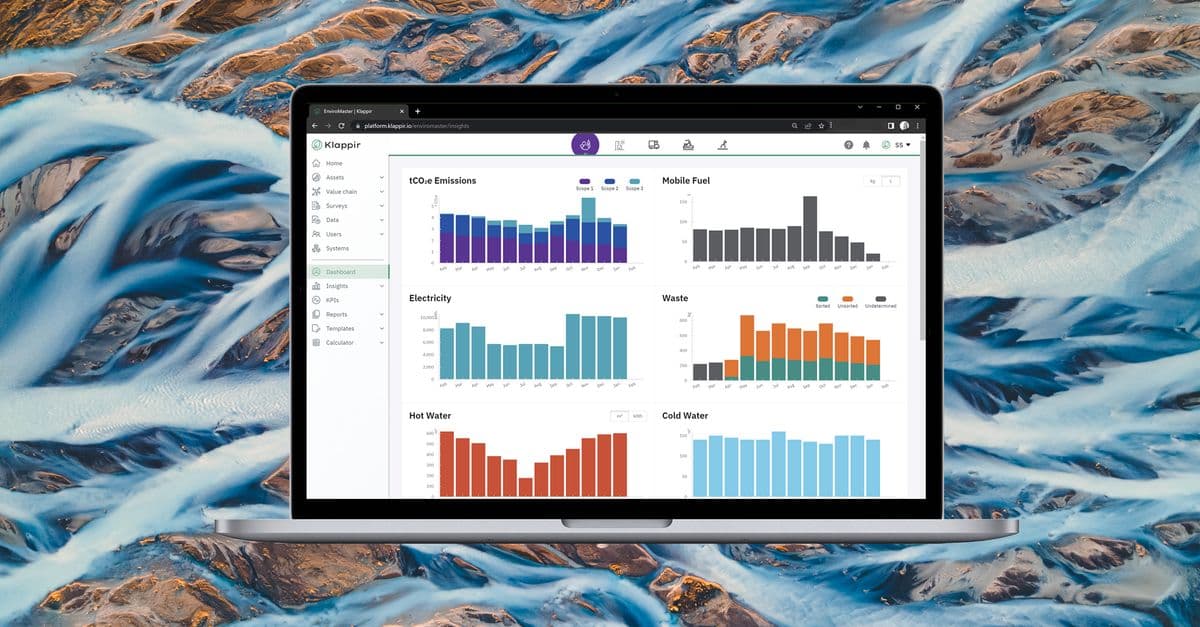
Klappir has been operating and developing sustainability software for the past decade. With a well-established presence and offices in Copenhagen and Reykjavik, Klappir has introduced the Sustainability Platform to companies with great success. The platform supports companies and institutions in preparing for the new CSRD directive and ESRS standards with both quantitative carbon accounting and qualitative IRO, strategy, and target management tools.
"Klappir has been a significant part of our company's success in working with carbon accounting. Klappir has assisted and advised us right from the start of our sustainability journey. With their knowledge and expertise, they have supplemented and substantiated our suppliers' data, mapped critical areas, and advised us on best practices, enabling us to use our sustainability data to make more sustainable decisions. Their platform is also super easy to learn to use, and Klappir has supported us throughout our journey in working with sustainability and carbon accounting," says Rasmus Christian Jørgensen - Innovation Manager from Symbion A/S.
Klappir’s Sustainability Platform provides the tools and guidance to help businesses comply with these new rules. The solution is made affordable by standardising and automating lots of the work, saving employee resources on data collection and ensuring sufficient expertise in order to comply and cover all ESG matters. At Klappir, we are working hard to adapt our technology and methods to the CSRD requirements, so businesses of all sizes can get on board with Europe's sustainability plans.
"We no longer need to worry about how we collect consistent ESG data for the entire group, even across national borders. When we need data from a new supplier, we add them to our Value Chain, and Klappir ensures that data comes in with specifically calculated emission factors. This means that we can start optimising each business and involve the entire organisation in our sustainability journey," says Elnaz Ehsani, Climate and Sustainability Manager at BYGMA.
Additionally, the Platform reduces costs, mitigates risks across the value chain, and creates new opportunities to reduce emissions. We support our customers in engaging more and more effectively with their suppliers, so they can get more accurate and transparent data while easing the process for suppliers to provide it.
Compliance with the CSRD and ESRS is not merely a legal obligation but also an opportunity for businesses and organisations to differentiate themselves as sustainable leaders. By embracing these regulations, businesses can enhance their reputation, attract responsible investors, and contribute to a more sustainable future.
Related articles:
The CSRD and Supply Chain Governance
Data Accuracy and Completeness in ESG Reporting
Article published 14.06.2023 in csr.dk, Hvordan ændrer vi “kedelig” compliance til nye komparative fordele?
Klappir
Klappir Green Solutions
Klappir is a sustainability data platform that helps organizations measure, manage, and report their environmental impact.