
The data that runs your sustainability reporting should also run your operations
Most organisations treat sustainability data as something produced for disclosure. The ones getting the most value from it are using the same data to cut costs, reduce waste, and make better operational decisions every day.
The challenge
Operational data exists. The visibility to act on it doesn't.
A store manager knows roughly how much energy their location uses. Without a consistent, comparable view of performance relative to others or last month, improvement is anecdotal.
Choosing between air freight and sea freight is a cost decision. It's also an emissions decision. When operational data and sustainability data live in separate systems, decisions get made without the full picture.
The sustainability team produces the annual report. The operations team runs the business. The data underlying both is often the same — but flows through different processes, producing different numbers.
Operational efficiency and sustainability performance are the same problem.
When sustainability data is structured to withstand reporting scrutiny, it's also structured well enough to drive operational decisions. The infrastructure is the same — the audience expands.
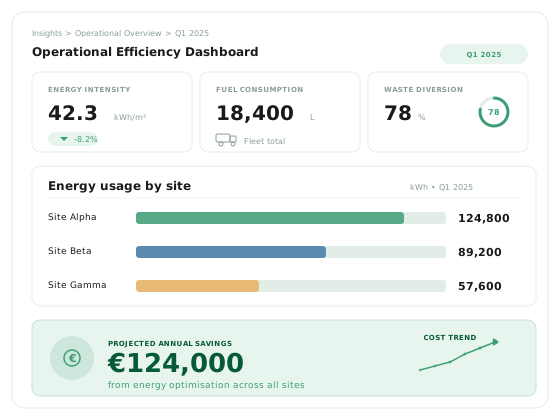
Klappir captures operational data continuously — energy by machine, fuel by vehicle, waste by site. That data is already structured to be auditable. It's also structured to be actionable: consistent enough to compare locations, granular enough to identify where reduction is possible, and current enough to track progress in real time.
The sustainability team uses the same data for disclosure. The operations team uses it for efficiency decisions. Both are working from a single source of truth — not two versions of a number that never quite match.
In practice
The platform is the basis for us to set measurable goals when it comes to reducing waste in energy, water, heating and fuel.
Hagar — Retail & distribution
How it works
What changes when sustainability data drives operations too
Typical approach: Aggregate utility bills with no breakdown by location, machine, or cost centre. With Klappir: Real-time energy intensity by machine, site, or operational unit — comparable across the whole organisation.
Typical approach: Cost-only analysis; emissions impact calculated separately or not at all. With Klappir: Operational and emissions data unified — every logistics decision includes carbon context.
Typical approach: Anecdotal comparisons, no consistent baseline across sites. With Klappir: Comparable metrics across locations and time periods — efficiency gaps surface automatically.
Typical approach: Targets set at annual reporting time, measured retrospectively. With Klappir: Targets set against real operational data; progress tracked continuously throughout the year.
Typical approach: Sustainability team owns the data; operations teams work from separate systems. With Klappir: Same infrastructure serves reporting and operations — one source of truth for both.
Typical approach: Waste tracked for annual disclosure, not for operational feedback. With Klappir: Continuous visibility creates closed loops — identify, target, reduce, verify.
Common questions about operational efficiency
Answers to the questions we hear from organisations using sustainability data for operational decisions.
Energy consumption by machine and site, fuel usage by vehicle and fleet, waste generation by type and location, water consumption, and procurement data. All captured continuously from operational systems.
Down to individual machines, vehicles, and sites. Energy intensity per machine, fuel consumption per route, waste per production line. Granular enough to identify where reduction is possible and track progress.
Yes. That is the core principle. The same structured data serves both sustainability disclosure and operational decision-making. One source of truth, two audiences.
Consistent data structure across all locations means sites are automatically comparable. Energy intensity, waste diversion rates, and emissions per unit of output can be compared across the entire organisation.
No. The platform integrates with existing systems and captures operational data from them. It adds the structure, consistency, and emissions context that operational systems typically lack.
Ready to put your sustainability data to work operationally?
See how structured data infrastructure connects sustainability reporting and operational decision-making. Trusted by 700+ organisations across 50+ countries.
No commitment. No sales deck. Just a conversation about your data.