
The Platform
A structured data system for resource management
Collect operational data from any source. Structure it into a consistent, auditable foundation. Use it for emissions calculations, compliance reporting, operational insights, and value chain collaboration, all from the same system.
The Five Capabilities
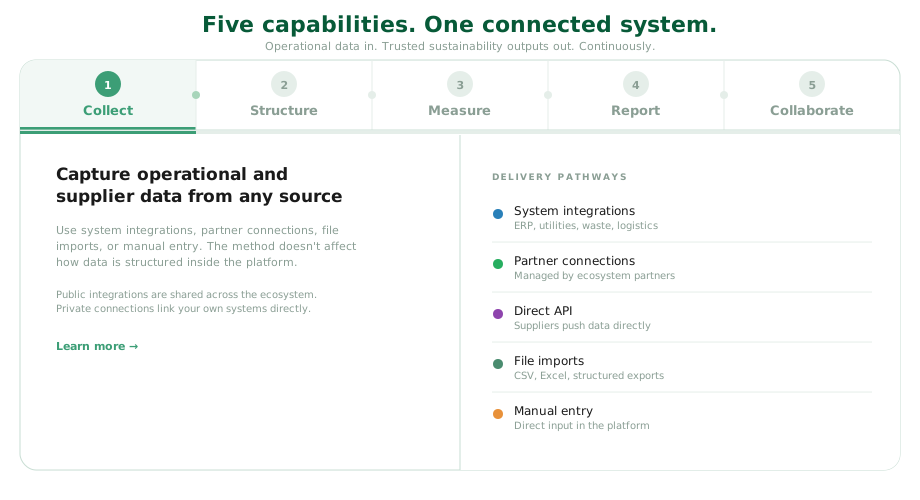
Five capabilities. One connected system.
Operational data in. Trusted sustainability outputs out. Continuously.
Collect
Capture operational and supplier data from any source. Use system integrations, partner connections, file imports, or manual entry.
Learn moreStructure
Make your data consistent. Every record is standardised using shared classifications. Original source data is preserved while structure is applied on top.
Learn moreMeasure
Turn structured activity into emissions and performance visibility. Scope 1, 2, and 3 calculated automatically. Metrics update as data enters.
Learn moreReport
Generate reports and trace every number back to its source. Climate Report, Nasdaq ESG, VSME, CSRD, all from the same foundation.
Learn moreCollaborate
Exchange structured sustainability data with suppliers, subsidiaries, and partners. Contributed once, reused across relationships.
Learn moreData Infrastructure
What happens to your data inside the platform
Every record is standardised, validated, classified, and stored as a traceable transaction. This is the architecture that makes everything else reliable.
Value Chain
A structured registry of every supplier and partner your organisation works with.
Assets
Buildings, vehicles, vessels, airplanes, structured so performance can be tracked at any level.
Transactions
Every operational record becomes a structured transaction with a clear source, classification, and timestamp.
Classifications
Raw data is mapped to standardised UNSPSC classifications that define how activities are categorised and calculated.
Data Mapping
Incoming labels from external systems are connected to governed supplier, asset, and classification identities.
Import
Multiple pathways for getting data in, from automated integrations to manual entry. The method doesn't affect how data is structured.
Audit Trail
A complete history of every data point, source, changes, and calculations, maintained automatically.
Outputs
One foundation, many outputs
The same structured data powers every output. New outputs can be added without rebuilding the system.
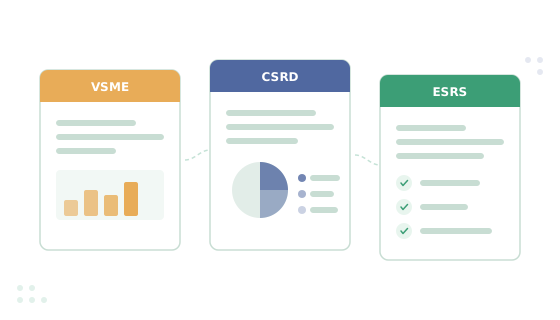
Sustainability reports
ESRS, CSRD, VSME, climate reports, Nasdaq ESG, generated from structured data, mapped to different frameworks.
Learn moreCarbon accounting
Scope 1, 2, and 3 emissions calculated automatically. Factors update when methodologies improve.
Learn moreOperational insights
Energy, waste, water, and resource consumption visible across sites, entities, assets, and suppliers.
Learn moreKPIs
Set targets at group, entity, or asset level and track progress automatically as data enters. Visual dashboards give stakeholders a clear view of where things stand, no manual updates, no waiting for the next reporting cycle.
Learn moreIntegrations, partners, and the ecosystem
Data enters through multiple pathways. The platform supports shared integrations across the ecosystem and private connections to your own systems.
Public connections — Shared integrations maintained across the ecosystem. When a data provider is already connected, their data flows to every customer who needs it.
Private connections — Direct connections to your own systems. Set these up yourself or work with an implementation partner.
A certified partner network provides implementation, advisory, and technical services, locally delivered, operating within the same data standards.
Platform Questions
Answers to common questions about the Klappir platform.
Most ESG tools focus on collecting survey answers and producing reports. Klappir structures the underlying operational data itself, so every number in every report traces back to a verified source transaction. This means you can switch frameworks, add new outputs, or respond to auditor queries without rebuilding your data foundation.
Klappir accepts data from any operational source: utility providers, fleet systems, ERP platforms, supplier surveys, manual entry, and file imports. Public integrations are shared across the ecosystem, so when a data provider is already connected, their data flows automatically. Private connections link directly to your own systems.
A typical implementation takes weeks, not months. The timeline depends on the number of data sources and the complexity of your organisational structure. Our team or a certified partner handles onboarding so your internal teams can focus on their work.
Klappir is ISAE 3000 Type 2 assured, GDPR-ready, and maintains a complete audit trail for every data point. All data is hosted in secure European data centres. Role-based access controls ensure that users only see the data relevant to their responsibilities.
Yes. Contact our team to arrange a guided walkthrough of the platform with your own data scenario. We offer a 30-minute demo tailored to your organisation's needs, with no commitment required.
Yes. Klappir is designed for organisations with multiple entities, subsidiaries, and reporting levels. Each entity maintains its own data while group-level consolidation happens automatically. You can track performance and generate reports at any level of your organisational structure.
See the platform in action
Every organisation's data landscape is different. Talk to our team to see how Klappir fits your infrastructure in a 30-minute walkthrough. No commitment required.