
Platform / Collect
Your sustainability data is scattered across systems, suppliers, and files
Capture it from ERPs, meters, suppliers, files, and manual input, and structure it into a consistent, auditable data layer.
Used by 200+ organizations across 26 countries
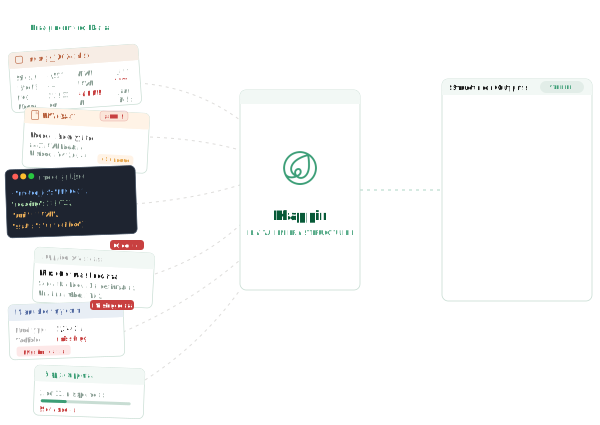
Every reporting cycle, someone rebuilds the puzzle
Energy data in spreadsheets. Invoices in email. Supplier activity nowhere. The data exists, it's just never in one place, in one format, ready to use.
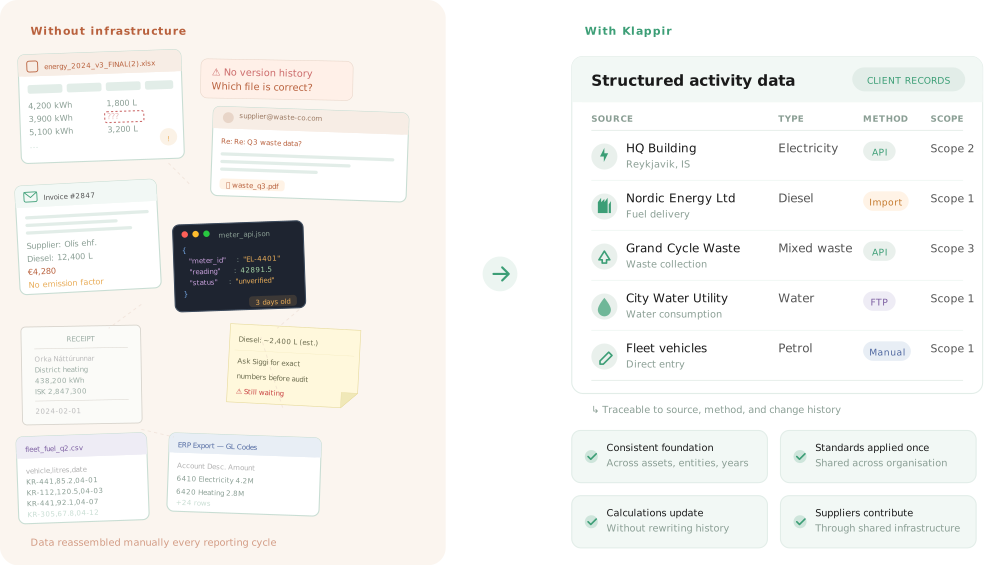
From chasing data to receiving it
Multiple ingestion methods feed one canonical data model. Data enters the platform once and serves every downstream need, from calculations and reports to audits and disclosures.
DATA CATEGORIES
One infrastructure for all operational activity
Every type of sustainability data flows into the same structured foundation, regardless of source or format.
Operational systems
ERP systems, financial records, and procurement platforms
Facilities and utilities
Energy meters, electricity providers, heating systems, and water usage
Service providers
Waste collection, recycling partners, retailers, logistics and transport providers
Suppliers and partners
Value-chain activity and sustainability disclosures
Operational activities
Activities that are tracked manually or outside formal systems
INGESTION METHODS
Connect what you can. Enter what you can't.
The platform adapts to your setup and applies the same structure regardless of how data arrives.
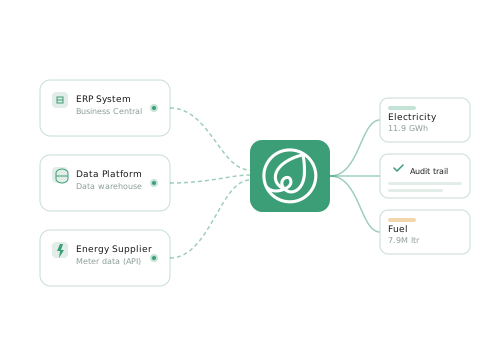
System integrations
Automatically ingest data from ERP systems, data platforms, and external services. Public integrations are shared across the ecosystem. Private connections link your own systems directly.
- Real-time data from ERP systems and data platforms
- Public integrations shared across the ecosystem
- Private connections link your own systems directly
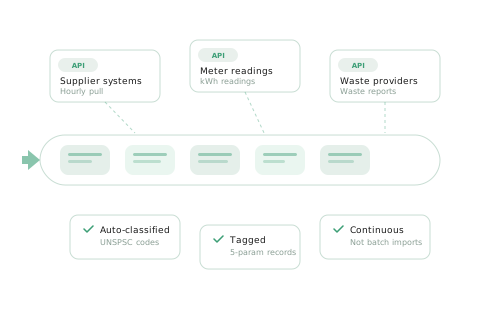
Automated import via API
Real-time data integration from operational systems and supplier platforms. Data enters continuously rather than in periodic batches.
- Real-time data integration from operational systems
- Continuous ingestion rather than periodic batches
- Automated transaction tagging and classification
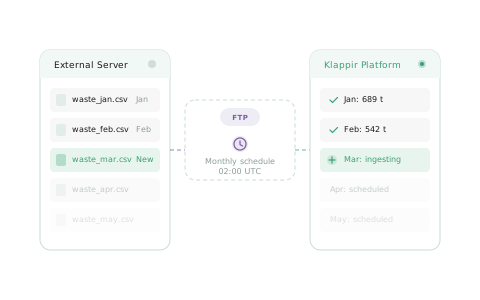
Automated import via FTP
Schedule secure data transfers from external servers. Useful when providers deliver periodic exports on a fixed cadence.
- Secure scheduled file transfers from external servers
- Useful for providers with periodic exports on a fixed cadence
- Full audit trail from the moment data enters
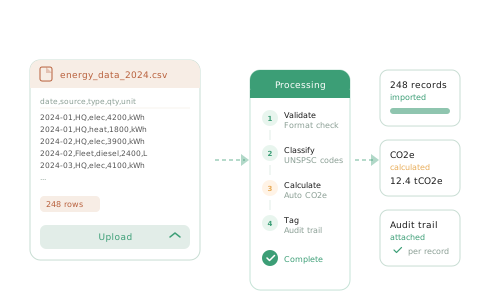
File imports
Upload structured files in CSV, Excel, or other standard formats. Useful for bulk historical data or providers who deliver periodic reports.
- CSV, Excel, and other standard formats
- Bulk historical data or periodic provider reports
- Activity data import with auto CO2e calculation
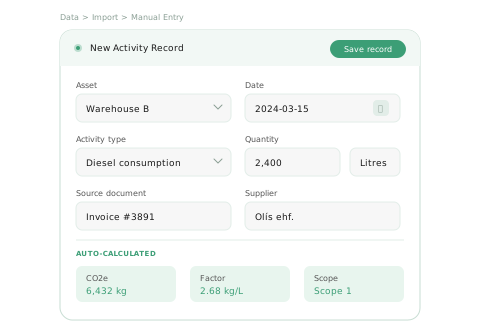
Manual entry
Enter individual activity records directly when no integration or file exists. Designed for early-stage digitisation or activities not yet tracked in formal systems.
- Individual activity records entered directly
- Early-stage digitisation or activities outside formal systems
- Same governed environment as automated data
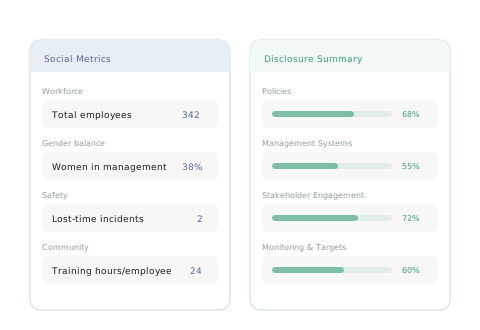
Direct entry for social and governance data
Manual entry interface for social and governance metrics that have no automated source.
- Social metrics: workforce, community, safety
- Governance metrics: board composition, policies
- Same audit trail and lineage as environmental data
CONNECTIVITY
Public and private connections
Shared integrations maintained across the ecosystem. When a data provider or supplier is already connected, their data flows to every customer who needs it. No setup required on your side.
Direct connections to your own systems, like ERP or financial platforms. Set these up yourself using published guidelines, or work with an implementation partner who manages the pipeline for you.
Read how our customers collect data
ÞG Verk (a construction company) lacked an overview of waste and emissions across its construction sites, data was buried in invoices with opaque category codes, and environmental performance depended on individual foremen rather than company-wide systems.
Connecting to the Klappir Platform replaced manual data collection with an automatic flow from service providers into a single structured system, with every data point traceable back to its source. Between 2022 and 2024, Scope 1 emissions fell by 39%, and waste sorting increased to 96.8% from 57% in 2018. What began as an attempt to understand basic consumption data has become a structured, auditable system of record for the entire group.

ÞG Verk results after implementing Klappir
Scope 1 emissions reduction (2022-2024)
Up from 57% in 2018 to 96.8% in 2024
Up from 33% to 70.9%
“Implementing the Klappir Platform was a complete game-changer for us.”

Common questions about data collection
Answers to the questions we hear from sustainability teams evaluating Klappir Collect.
Energy (electricity, heating, cooling), fuel, waste, water, materials, transport, supplier transactions, investment portfolios, employee commute, and social/governance metrics. Environmental data follows the Greenhouse Gas Protocol framework. ESG data aligns to Nasdaq ESG guide, and SDGs.
Initial setup depends on the number of data sources. API connections to existing systems typically go live within days. Survey modules are pre-built and deploy immediately. Most organizations have core data flowing within the first month.
Yes. The Automation Hub connects to ERP systems like Business Central through standard API and FTP integrations. Data flows automatically on a schedule you define. One-to-one connections for internal systems, one-to-many for ecosystem suppliers.
Every transaction is tagged with 5 key parameters and classified using UNSPSC codes. An extensive conversion factor library handles unit conversions automatically. All data receives a full audit trail from the moment it enters the platform, including invoice numbers and product descriptions.
The Survey module provides structured digital questionnaires instead of ad-hoc emails. Suppliers receive clear, scoped requests through the platform. The Core Plan is free for value chain participants, which removes cost as a barrier to adoption.
Spreadsheets require rebuilding data every reporting cycle. They cannot provide audit-grade traceability, handle multi-entity consolidation, or exchange verified data across organizations. Klappir collects data once and makes it available for calculations, reports, and audits without re-collection. Every figure carries full lineage from source to statement.
Structure is the next step
Collection gets data into the system. Structure makes it consistent, and reusable.