
A sustainability strategy without a system is just an intention
Most organisations know what they want to achieve in terms of sustainability. The gap is between that intention and a structured process that translates it into targets, actions, and a disclosure you can stand behind. Data alone doesn't close that gap.
The challenge
Between the data and the disclosure, there's a process most organisations haven't built
Data collection is only the start — the real work happens in translating that data into policies, assigning accountability, and building the qualitative narrative. Most organisations leave this layer unstructured, scattered across documents and emails with no clear ownership or traceability.
Materiality assessments get completed once and shelved. Under ESRS, double materiality is mandatory, but organisations often treat it as a one-time compliance exercise. When business priorities shift, the assessment becomes outdated with no system to keep it connected to actual targets and actions.
Sustainability goals are set at leadership level but distributed across departments with no shared view of progress, accountability, or what's actually being done to achieve them.
ESRS demands more than metrics — it requires policy statements, business model descriptions, and explanations of how material impacts are managed. Without a system to organise this content continuously, it gets assembled under pressure with no consistency or audit trail.
Sustainability strategy needs a system, not a document.
Klappir connects the ambition to the disclosure — providing the structure for materiality, targets, governance, and narrative that most organisations try to manage across scattered documents.
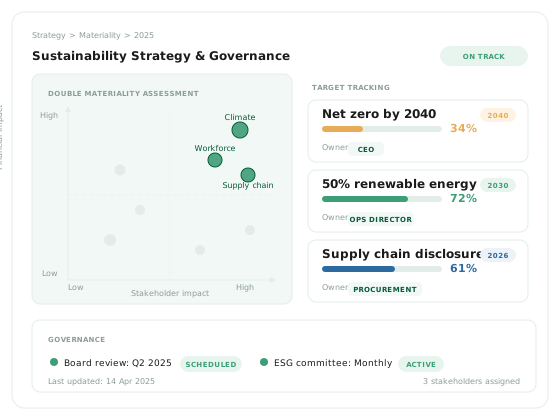
A sustainability strategy needs a place to live — not a presentation, but a system. Klappir provides the structure to document material topics, assign target ownership, track actions, and build the narrative content that a disclosure requires. All connected to the underlying data.
Materiality assessments stay current because they're linked to business operations, not filed away. Targets have owners and visibility. Policies and governance documents are maintained as living records — not assembled from memory at year-end. When disclosure time comes, the work is already done.
In practice
The system is a godsend not only for us who do the environmental reporting but also for our machinists and engineers, who now have a comprehensive overview of the energy intensity of every single machine.
Ölgerðin — Beverage manufacturing
How it works
What changes when strategy and process have a home
Materiality assessment
Typical approach: Completed once as a compliance exercise, stored as a document. With Klappir: Documented and maintained as a living record — connected to targets, reviewed as business context evolves.
Target ownership
Typical approach: Set at leadership level, distributed without shared visibility or accountability. With Klappir: Targets assigned to owners, progress tracked, and visible across the organisation.
Policy and governance documentation
Typical approach: Scattered across emails, shared drives, and spreadsheets with no version control. With Klappir: Structured and maintained as traceable records directly connected to disclosure.
Narrative disclosure
Typical approach: Assembled under pressure at year-end from documents with no consistent ownership. With Klappir: Built continuously from structured content throughout the year — auditable and consistent.
Cross-functional process
Typical approach: Sustainability owns the process; other functions contribute ad hoc. With Klappir: Shared structure gives all functions visibility into their role and contribution.
Progress tracking
Typical approach: Progress reviewed once a year when the report is due. With Klappir: Continuous visibility into targets, actions, and outcomes — course corrections happen in-year, not after.
Common questions about sustainability strategy
Answers to the questions we hear from organisations building structured sustainability programmes.
Double materiality assessments are documented and maintained as living records within the platform. They stay connected to targets and business operations rather than being filed away as a one-time exercise.
Sustainability targets are assigned to specific owners with visibility across the organisation. Progress is tracked continuously against operational data, not reviewed retrospectively at year-end.
Policies, governance structures, and business model descriptions are maintained as structured, traceable records within the platform. They are built continuously rather than assembled under pressure at disclosure time.
ESRS requires more than metrics. The platform provides the structure to build policy statements, impact descriptions, and governance narratives continuously throughout the year, connected to the underlying data.
Yes. The shared structure gives all functions visibility into their role and contribution to the sustainability programme. It replaces the pattern where sustainability owns the process and other functions contribute ad hoc.
Ready to build a sustainability programme that holds together?
See how structured data infrastructure supports strategy, process, and disclosure — not just reporting. Trusted by 700+ organisations across 50+ countries.
No commitment. No sales deck. Just a conversation about your data.