

Guldsmeden Hotels: From conviction to data
Guldsmeden Hotels made sustainability a core part of their operations long before it became an industry standard. With Klappir, they gained the data infrastructure needed to demonstrate real-world results.
A hospitality philosophy, 27 years in the making.
Guldsmeden Hotels started in 1999 as a 15-room hotel in Aarhus. Today, the group operates 11 properties across five countries, including Copenhagen, Aarhus, Berlin, Bremen, Menton in France, Oslo and Ubud in Bali, with a new location opening in Hamburg.
Sustainability has been part of the operation from the beginning, not as a marketing position but as a practical philosophy: buy durable second-hand furniture, serve organic food, sort waste, choose verified suppliers, reduce energy and water use. The hotels hold the Golden Ø label (above 90% organic food and drink), Green Key, and Green Globe certifications.
As the group expanded, the need shifted from relying on instinct to supplying clear evidence. Their values remained strong, but demonstrating them with structured, comparable data across all properties became necessary.
In May 2026, Forbes featured Bryggen Guldsmeden in a piece on Copenhagen’s sustainable tourism sector, describing Guldsmeden’s properties as being “at the forefront of sustainability” and naming the hotel as one of the city’s defining examples of resource innovation in hospitality.
The values were established. The data layer was not.
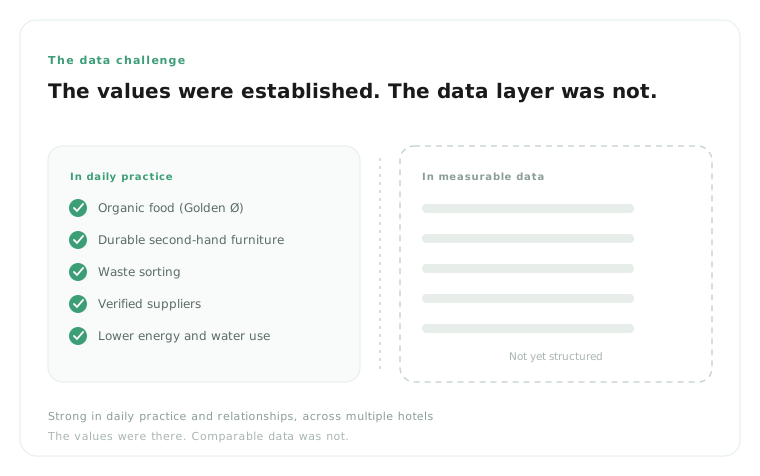
For decades, Guldsmeden Hotels made sustainability decisions by sourcing organic ingredients and choosing suppliers with strong environmental credentials. However, much of this progress was reflected in daily practices and relationships, not in measurable data.
As guests, partners, and the industry began to request verifiable sustainability data, and ESG reporting expectations increased, Guldsmeden Hotels recognised the need for a solid data foundation to match their ambitions. Managing energy, water, waste, and emissions among multiple hotels and multiple data sources required a solution beyond traditional spreadsheets.
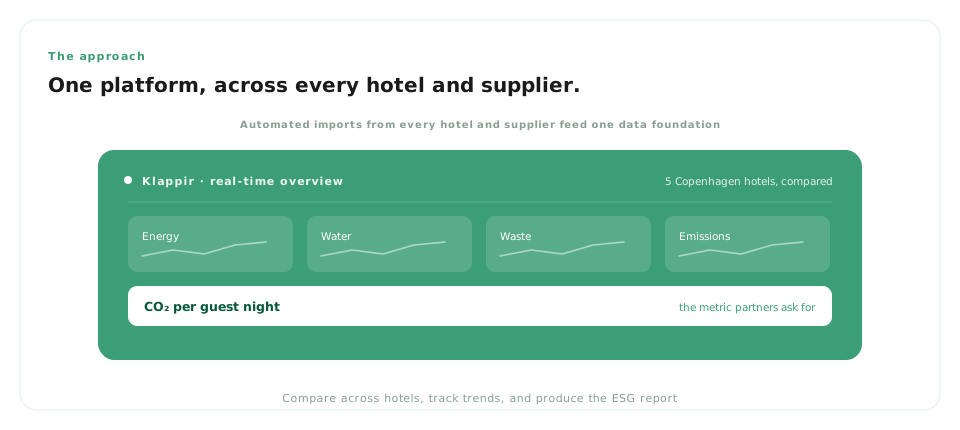
One platform, across every hotel and supplier.
By partnering with Klappir, Guldsmeden Hotels created a unified data foundation for energy, water, waste, and emissions covering their Copenhagen properties. Automated data imports from suppliers decrease manual work and reduce the risk of errors.
The platform provides the team with a real-time overview of all hotels, enabling easy comparison, trend tracking, and clear identification of points for improvement. CO₂ emissions per guest night, a key metric for business partners, is now readily accessible through the platform.
Guldsmeden Hotels now uses Klappir as the data backbone for its ESG report. Their second report (2024/25) expands Scope 3 data coverage, making the results more complete and valuable for decision-making, even though the more extensive data can make the footprint appear larger.
The platform revealed a gap between perception and reality in waste sorting. When the initial data showed a lower-than-expected sorting rate, the team responded by adding sorting stations in public areas, inviting guests to participate alongside staff. This action led to measurable results: the sorting rate increased from 34.2% to 39.1%, and unsorted waste dropped by 12.3% year-on-year.
The results
What the data shows.
Waste sorting rate up 4.9 percentage points
From 34.2% to 39.1% (2024/25 Copenhagen hotels). Unsorted waste is down 12.3% year-on-year.
Energy efficiency improving
Energy consumption per guest down from 19.34 to 18.62 kWh. 100% of energy is purchased from renewable sources (NRGi certificates, in place since 2007).
Plant-based food at 55.6%
Up from 46.4%, reducing food procurement CO₂e per kilogram from 3.0 to 2.6 kg. On track toward the 65% target for 2030.
Combined Scope 1 and 2 emissions down
Location-based Scope 1 and 2 combined fell from 335 to 316 tCO₂e. Scope 3 data coverage expanded substantially in 2024/25, delivering a more complete picture of the full footprint for the first time.
There are still points for improvement.
Food waste per guest increased from 92 to 138 grams in 20 due to higher guest volumes, F&B staff turnover, beverage, and a temporary lapse in adherence to internal guidelines. Water consumption per guest also rose slightly, from 156 to 164 litres, partly because of spa and pool use. Guldsmeden Hotels are open about these challenges in their report and have set clear 2030 targets for reduction. This honest reporting strengthens the credibility of their data.
“For us, sustainability has always been common sense; it simply makes good business sense. But with Klappir, we have taken it to the next level. The platform gives us reliable, automated data and clear insights into CO₂ emissions from guests, how we can save CO₂ and costs by reducing our consumption, or how we can improve our waste sorting. Klappir’s analytics tools help us see where we can improve and make real, measurable progress. It has turned our sustainability work from good intentions into documented results, which is something we can proudly share with our guests, partners, and team.”

A data foundation that keeps deepening.
Guldsmeden Hotels will continue to expand the supplier data connected to the platform, with a focus on Scope 3 emissions throughout the value chain. The 2024/25 report indicates a significant step forward in Scope 3 coverage, and the next goal is to include even more supplier-specific data.
The group is also investing in water-saving technology: Orbital Showers, already installed in 211 rooms at Bryggen Guldsmeden and reducing water use by up to 90%, will be extended to 33 additional rooms at Babette Guldsmeden and to all rooms at Belle Guldsmeden opening in Aarhus in summer 2026. The Orbital shower system at Bryggen Guldsmeden was singled out by Forbes in May 2026 as one of Copenhagen’s most significant examples of resource innovation in hospitality, described as using “highly advanced recycling technology” that “reduces water consumption between 60 and 90 percent.”
After twenty-seven years, sustainability stays at the heart of Guldsmeden Hotels’ operations. With a strong data foundation, they can now verify their progress and take well-informed action based on the data shown.
Further reading: A greener stay, backed by data. The Guldsmeden Hotels and Klappir Partnership
Common questions
What teams most often ask about this story.
To collect and structure energy, water, waste and emissions data across their Copenhagen hotels, allowing real-time comparison across properties and producing the data behind their annual ESG report. The CO₂-per-guest-night KPI is a specific output that their business partners request directly.
No. Guldsmeden Hotels expanded their Scope 3 data coverage significantly in 2024/25, adding food purchases, packaging, and additional purchased goods and services categories that were not included the year before. The increase reflects better measurement, not higher actual emissions. The group treats expanded coverage as progress, not a setback.
All Copenhagen hotels are Green Globe certified (recertified in 2024/25), and the group holds the Golden Ø label for above 90% organic food and drink, as well as Green Key. They have purchased 100% renewable energy through NRGi (formerly Natur Energi) since 2007.
The 2024/25 ESG report focuses on the 5 Copenhagen hotels, where the group headquarters are located, as a way to build depth and data quality before extending to the full 11-property portfolio. Future reports aim to include additional locations.
Have a different question?
Talk to our team about your organisation’s data infrastructure.
See how the platform fits your operation
We’ll look at how your hotels track energy, water, waste and emissions today, and show you how one owned data foundation replaces scattered spreadsheets.
No commitment. No sales deck. Just a conversation about your data.