
Platform / Data Infrastructure / Assets
Your operational infrastructure
Buildings, vehicles, vessels, airplanes, and other operational assets, structured so performance can be tracked at any level.
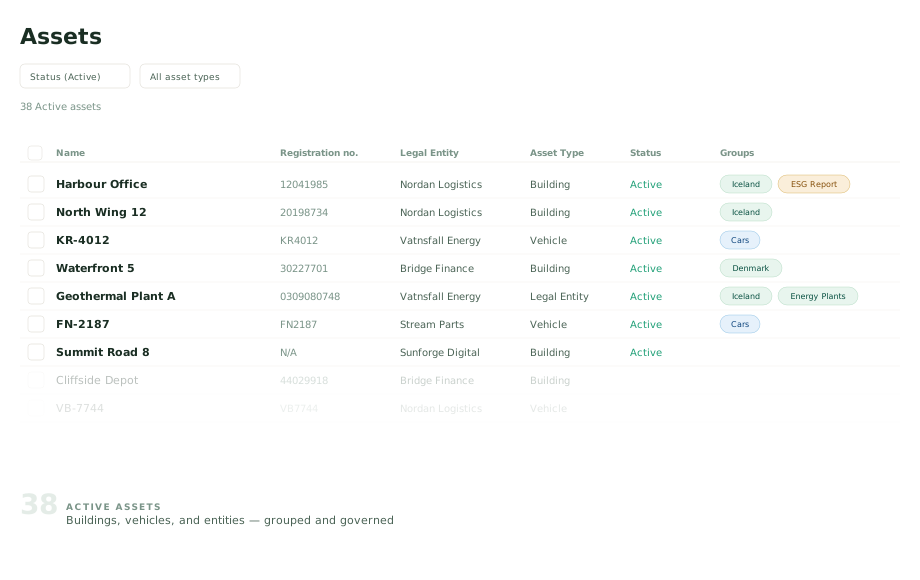
The link between infrastructure and data
Every activity record in the platform is linked to an asset. Assets represent the physical and operational infrastructure where activity occurs. They belong to entities and determine how data is segmented in reporting, by site, by fleet, by facility, by business unit.
Assets allow you to track energy consumption per building, fuel use per vehicle, emissions per vessel, and performance across any operational grouping. Without asset mapping, data exists but can't be allocated to specific parts of the organisation.
Assets can be grouped and shared with a subsystem. This allows drill-down into performance at whatever level of detail your operations require.
KEY DETAILS
How assets organize your data
Asset types
Buildings, vehicles, vessels, airplanes, and other operational infrastructure
Entity hierarchy
Assets belong to entities within the organisational hierarchy
Activity record linking
Activity records are linked to assets through data mapping
Reporting allocation
Changing an asset link affects reporting allocation but does not change emission values
Subsystem grouping
Assets can be grouped and shared with subsystems for more granular performance tracking
Assets shape what you see in Measure
Asset structure determines how performance data is grouped in the Measure capability and how reports are segmented. When operational insights show an anomaly, energy running outside hours, unexpected fuel consumption, the asset link is what tells you where it's happening.