
Klappir takes next growth step with Swedish Stock Exchange listing
Plans to register the company on the Swedish stock exchange. Klappir is already listed on the First North growth market in the Icelandic stock exchange.
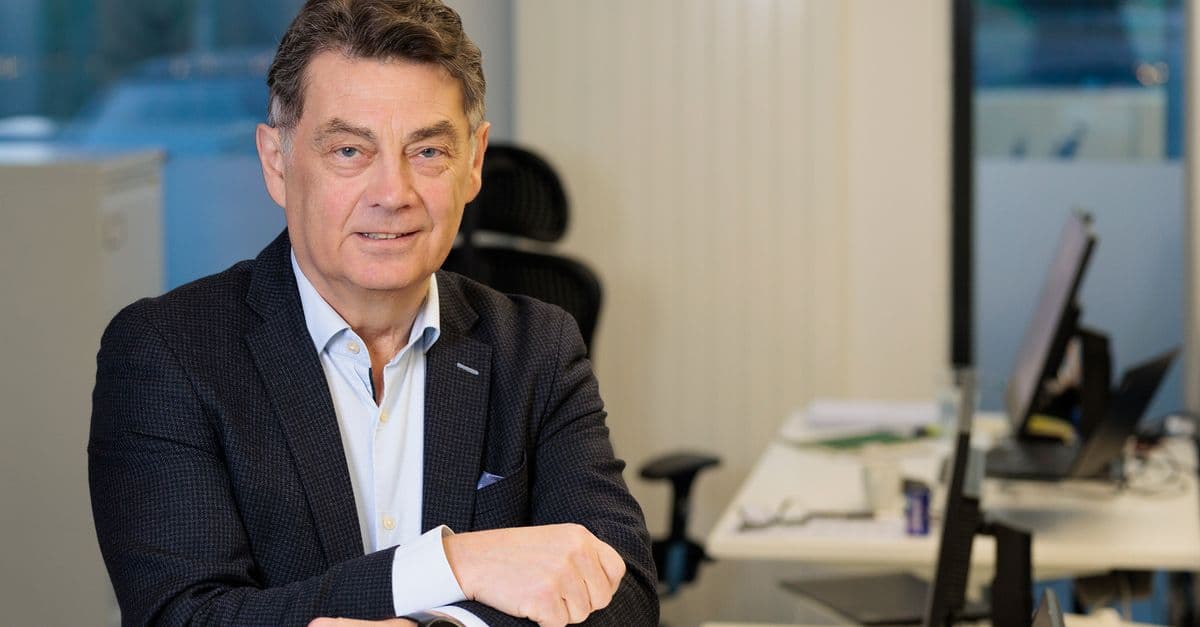
Plans to register the company on the Swedish stock exchange. Klappir is already listed on the First North growth market in the Icelandic stock exchange.
By Klappir
Planned nordic expansion with Swedish Stock Exchange registration
Klappir's planned registration in Sweden marks the company's next growth phase, where operational foundation, product architecture and revenue model have been shaped with scalability as the guiding principle in recent years.
Energy engineer Jon Agust Thorsteinsson, co-founder and former CEO of the company, says in a conversation with Morgunblaðið that in 2019, the company formulated a clear five-year strategy.
"The goal was to transform the company into a pure cloud subscription company (Software as a Service (SaaS) / Product-Led Growth (PLG) company). The main purpose was that the product itself, supported by partners and an ecosystem approach, would be the driving force for international sales, scaling and growth," explains Jón.
Why Sweden? Access to capital and investor culture
He says that the next logical step was to move the company to a market that can support Klappir's next growth phase, both in terms of financing, market depth and a broader investor base. Therefore, they looked to Sweden. "The Swedish stock exchange has developed into a leading platform for listing growth companies."
Jon Agust says that Sweden has also built up a unique investment culture where the general public is an active participant in financing business. "The so-called 'Investeringssparkonto' system, or ISK accounts, has been decisive. Through this route, investment has been made into a daily, accessible and predictable savings method for individuals with a simple, stable tax environment that reduces complexity and encourages long-term thinking."
These are special custody accounts that individuals can open and are intended for investments in listed securities such as shares. This arrangement is something Jon has long advocated should be adopted in Iceland and has been under discussion here in recent years.
As Jon describes, about 3.5 million Swedes regularly invest through this route. "This means that the market is not only 'larger than the Icelandic one' on paper, but deeper in practice with greater turnover, broader distribution and a larger group of investors who follow companies through their financing processes.
For a company on an international growth trajectory like Klappir, this matters because it increases access to capital, strengthens stability in ownership and improves the foundation for continued building and value creation," says Jon.
Jon says that concurrent with the listing, a share capital increase will take place both in Iceland and Sweden to finance continued international expansion, ongoing product development and expansion of Klappir's ecosystem.
Changes to Klappir's share capital structure were announced recently in connection with the company's planned listing in Sweden. With the changes, the company's equity was transferred to euros and accounting was adopted according to international accounting standards (IFRS).
From Laxardalur to London, the journey of an engineer-entrepreneur
"I grew up at Halldorsstaðir in Laxardalur and those roots shaped my early understanding that real progress happens when knowledge, initiative and responsibility come together," says Jon.
He says that from a young age, he had a special interest in the interplay of components and systems thinking. "I have always sought to understand the whole and how different elements work together, which led me to engineering studies in Denmark. After completing my studies in 1985, I began work at Johnson Controls in Aarhus, where I worked on research and product development, sales and marketing, as well as the design of freezing and cooling systems. This was an extremely good formative time," says Jon.
"There I learned that technology alone doesn't create value, it needs to solve real problems and deliver measurable benefits for customers. Danish business culture also had a profound impact on me. There was a positive attitude toward companies, entrepreneurship and value creation, which was seen as a social good rather than something that needed to be justified."
After returning to Iceland in 1988, Jon participated in the establishment of a subsidiary of Johnson Controls in the country and later, together with others, in the establishment of Kælismiðjan Frost. "I worked in Iceland until 1998, when I accepted an offer for continued work with Johnson Controls in Aarhus. At the same time, I began doctoral studies at Aalborg University, in collaboration with the University of Iceland."
In the doctoral program, Jon worked on research on the interplay of different systems in fishing vessels, including the design of hull structure, cooling systems and catch handling. "There my interest in systems thinking and integration of technical solutions deepened further. After completing the project at Johnson Controls, I received permission to continue developing the methodology I had shaped to simulate and optimize dynamic ship energy systems. This resulted in the establishment of Marorka, with support from VSÓ in the early stages. Marorka built up international operations in the field of energy efficiency in shipping and had to, like many other companies, deal with the 2008 financial crisis and long-term fluctuations in the shipping industry. That journey was demanding, but very instructive, and taught me what it takes to build an international technology company in headwinds. In 2013, I largely withdrew from Marorka's daily operations."
After the sale of Marorka, Jon and his family moved to London. "We intended to rest and see how things would develop. At the same time, Thorsteinn Svanur and Sigrun Hildur were finishing graduate studies and were interested in working on their own ideas. Hildur, my wife, and I thought it was just as good to invest in their ideas, but then it was our wish to be involved," says Jon with a smile.
Building Klappir: Making sustainability measurable
This resulted in the establishment of Klappir Green Solutions in 2014, with the goal of developing software solutions that support targeted resource management and sustainability. Good resource management contributes to greater sustainability, and Klappir's goal from the beginning was to make corporate sustainability measurable, traceable and comparable based on resource data.
Klappir's ecosystem connects over 4,500 companies and public entities in 53 countries and supports the flow of standardized, traceable and verifiable data (e.g., energy use, waste, greenhouse gas emissions and other key metrics). "With such infrastructure, the goal is to reduce manual work, minimize the risk of greenwashing and accelerate targeted action on climate and sustainability issues," explains Jon.
AI and prediction models, the next frontier
He says that now, after Thorsteinn Svanur, co-founder, has taken over the helm, he himself wants to turn more to research, development and utilization of artificial intelligence. "I want to work more with the universities. There is one project underway that involves utilizing the datasets that Klappir has been collecting over the years and creating prediction models through artificial intelligence."
As Jon explains, there are tremendous opportunities in utilizing Klappir's extensive high-quality datasets to develop prediction models and other analytical solutions that shed light on the future impact of decisions. "By having trained AI examine the data, we can assess what consequences certain decisions have before they are made," says Jon.
He cites the newly introduced kilometer charge on cars as an example. "With such models, it would be possible, for example, to predict the impact of the charge on the composition of the country's vehicle fleet and whether it will accelerate electric vehicle adoption or have other unforeseen effects," he says.
Sustainability as resource management
Jon says that Iceland is a small nation with limited capital and therefore it matters that the investments undertaken deliver real benefits. "What we put into sustainability must be useful and pay back. Sustainability is fundamentally resource management, ensuring that we don't damage nature and don't spoil the opportunities of future generations," he says.
In his view, the key lies in better utilization. "Good resource management leads to lower costs, more efficient operations and better utilization of human resources."
Jon says that the implementation of sustainability at companies and public entities is at different stages, but that many entities have already taken leadership and systematically integrated sustainability into operations and management. "The development is increasingly driven by leading companies with a clear vision for the future and a genuine will for change, and they are now setting the standard that more will follow," he says.
Jon says that there is still considerable room for improvement when it comes to Icelanders' investments in sustainability. "We have great potential to do better. In international comparison, Iceland is in fifteenth place according to the United Nations assessment, while the Finns and other Nordic countries are at the top. This shows that we have clear benchmarks and role models to aim for, and opportunities to build further on the commitments we made with the Paris Agreement in 2015," he says.
Market shifts, power to the ecosystem
Jon says that in recent months there has been a certain shift in the discussion and prioritization of resource and sustainability issues, among other things due to increased uncertainty on the international stage.
In his view, this development has also led to positive changes in the market. "Consulting firms that previously worked independently have increasingly chosen to connect to Klappir's ecosystem as partners. This reflects a clear shift by consultants toward data-driven and scalable solutions," he says.
Jon says that this development confirms Klappir's strategy to focus entirely on product development, research and building technical infrastructure. The transfer of consulting projects to partners was fully completed in 2025. "It was an important milestone that strengthened both the ecosystem and Klappir's position for the long term," says Jon.
Global expansion
In addition to Europe, Jon says that Klappir is exploring opportunities in the UK, the United States and South America, where demand for reliable and comparable resource and sustainability data is growing rapidly. "Our strength lies in data processing, ensuring that data is correct, traceable and comparable between countries," he says.
Jon mentions the UK as an example of a market where such an approach could be useful. "In the UK, there are about 30 thousand schools that are legally required to deliver a sustainability report. With Klappir's solutions, it is possible, for example, to compare data from the Icelandic school system with British ones, which has great educational value," he says.
Such a comparison can, among other things, shed light on differences in waste generation between schools and countries and point to where opportunities for improvement lie.
Jon also says that the next step, if implementation were to happen, would be to better connect the children themselves into the system and enhance their understanding of what they can do to increase sustainability in daily life. "This can have a positive effect on households, when children remind parents about the environment. Children can be a tough master," says Jon and laughs.
Klappir's competitive position
Jon says Klappir is a world leader in its field and that the international market for digital resource and sustainability data infrastructure solutions is growing rapidly. "Demand for real-time data, traceability and data-driven decisions is growing rapidly, both among companies and investors," he says.
In his view, Klappir's competitiveness lies in its leading software solution, powerful distribution channel and close collaboration with consulting firms. "Many of them have now chosen to begin collaboration with Klappir and use the company's technical solutions to scale their services," says Jon.
Jon also points out that pension funds and other long-term investors are increasingly looking to sustainability in their investments. "Companies that have good oversight of their resource use and can demonstrate transparency and management are simply lower risk," he says.
Iceland's Tech companies
"The tech industry accounts for 16% of export revenue in Iceland. It can grow if done right. We have never had to face faster development in the sector than right now," says Jón, mentioning the development of artificial intelligence. "If we don't get increased capital, we will fall behind. The Danes, for example, are now putting tremendous amounts of capital into AI development and research. They intend to become leaders in Europe."
External threats are extensive. "International tech companies are now investing many times more in research, development and technological innovation than before, especially in the implementation and use of artificial intelligence. This is rapidly increasing their lead and narrowing the scope for Icelandic companies to keep up with rapid developments in the international market. These foreign companies then have the strength to buy up promising Icelandic companies that are financially weak," says Jon, who fears that Iceland is losing more and more companies abroad.
Jon says it is unfortunate how many good companies Icelanders have lost abroad. Marel, Össur and Kerecis have all gone on that path, although they still have operations here. "It's so expensive for Icelanders. We should have held onto these companies and continued to build them up, tried to finance them further and ensure them a good environment. That's how we build jobs for future generations. It takes blood, sweat and tears to build up such companies and then they're just in foreign ownership, after all the difficulty."
He says that although the operations of the companies he mentions continue in some form in Iceland, all decisions are made abroad.
Asked further about how we can retain these companies, Jon points to possibly with more investment by pension funds in the tech industry and individual investments through the stock exchange as in Sweden. "These parties can become the cornerstone in building the tech industry in Iceland."
Jon says that Klappir intends to remain in Iceland and grow from here.
"Although we are registering in Sweden, we just want to utilize all the good that comes with it. The parent company and the product will remain strong in Iceland and here we want to build ourselves up."
Source:
Article first published in Morgunblaðið, 11.02.2026.
Klappir
Klappir Green Solutions
Klappir is a sustainability data platform that helps organizations measure, manage, and report their environmental impact.