
Platform / Structure
Different sources. Same language.
Raw operational data arrives in dozens of formats. Structure it once using shared classifications, so every calculation, report, and audit speaks the same language.
Used by 200+ organizations across 26 countries
Inconsistent data leads to inconsistent results
One system records fuel in litres, another in cubic metres. Waste categories don't match between providers. Supplier A calls it "transport," Supplier B calls it "logistics."
When structure varies, emissions calculations become guesswork. Year-over-year comparisons fall apart. Auditors start asking questions no one can answer.
Structure makes data usable across the system
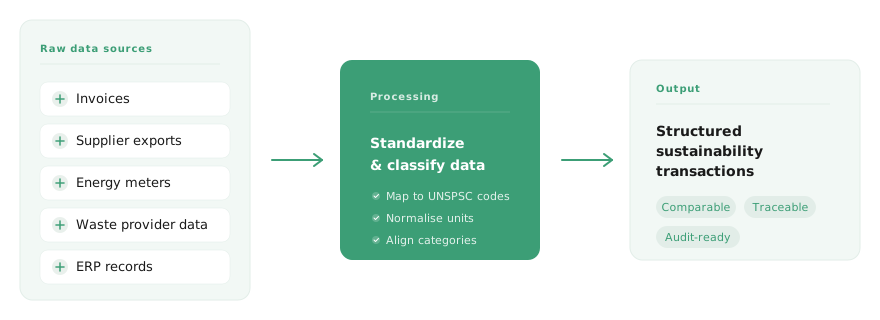
Incoming data is mapped to shared schemas and classifications. Units are normalised. Categories are aligned. Every record becomes comparable, across sources, entities, assets, and years.
SHARED CLASSIFICATIONS
Apply consistent classifications
Operational data is mapped to shared UNSPSC classifications that define how activities are categorised and calculated. Using consistent classifications ensures sustainability data is calculated using the same methodologies across organisations and reporting periods.
UNSPSC classification
Every activity record is mapped to a standardised UNSPSC classification, replacing inconsistent supplier codes with a shared taxonomy.
Consistent methodologies
Consistent classifications mean the same calculation methodology applies regardless of which entity, supplier, or system provided the data.
Cross-organisation comparability
Structured data is comparable across organisations, reporting periods, and geographies without manual reconciliation.
DATA GOVERNANCE
Ensure data quality and traceability
Klappir validates incoming data to ensure it meets sustainability reporting requirements. This governance layer ensures sustainability information remains transparent and verifiable.
Validation rules
Detect missing, inconsistent, or incomplete operational records before they affect calculations or reports.
Traceable transactions
Every data point is stored as a structured transaction with a clear operational source, linked to the originating entity and asset.
Audit trails
Maintain a full history of data imports, changes, and calculations. Every figure carries lineage from source to statement.
DOWNSTREAM USES
Structure once. Use everywhere.
Structured data feeds every downstream capability in the platform. Define the structure once and reuse it across all sustainability workflows.
Calculate emissions and resource impacts
Apply verified emission factors to structured activity data and calculate Scope 1, 2, and 3 emissions automatically.
- Scope 1, 2, and 3 emissions from structured activity data
- Verified emission factors applied automatically
- Resource impact calculations across entities
Generate sustainability indicators
Generate sustainability indicators and performance metrics from normalised, classified records.
- Sustainability indicators from normalised records
- Performance metrics across reporting periods
- Benchmarking across entities and assets
Monitor operational performance
Track energy, water, waste, and material consumption across entities and assets over time.
- Energy, water, waste, and material consumption
- Trends across entities and assets over time
- Drill down by department, site, or asset
Monitor resource use
Measure resource use at entity, asset, or organisational level with consistent units and categories.
- Resource use at entity, asset, or org level
- Consistent units and categories across sources
- Identify reduction opportunities
Support sustainability reporting
Produce audit-ready outputs aligned to CSRD, GHG Protocol, and other sustainability reporting frameworks.
- CSRD, GHG Protocol alignment
- Audit-ready outputs with full data lineage
- EU Taxonomy and SDG mapping
Read how our customers standardise data
Kópavogur municipality manages over 300 assets, schools, pools, vehicles, and facilities, and continuously generates sustainability data across dozens of systems. Without a structure linking each record to the right entity and location, that data can't be consolidated or acted on.
Since 2015, Klappir has brought it all together into one place, with each record linked to the correct organisational identity and available for both asset-level drill-down and municipal-level reporting.
"I envision that the Klappir Sustainability Platform will be a cornerstone in our environmental approach in the foreseeable future."
Encho Plamenov Stoyanov, Project Manager, Environment and Planning, Kópavogur

Common questions about data structuring
Answers to the questions we hear from sustainability teams evaluating how Klappir structures operational data.
UNSPSC (United Nations Standard Products and Services Code) is a global classification system used to categorise products and services. Klappir maps every activity record to UNSPSC codes so that data from different suppliers, systems, and geographies follows a single shared taxonomy. This ensures consistent emission factor application and cross-organisation comparability.
Klappir uses a built-in conversion factor library to normalise units automatically during ingestion. Whether a supplier reports fuel in litres, gallons, or cubic metres, the platform converts to a consistent unit so calculations and comparisons are accurate across all sources.
No. Classification mappings are configured once during onboarding and then applied automatically to all incoming data. If a new data source uses unfamiliar categories, the mapping is extended — existing classifications remain unchanged.
Every data point is stored as a structured transaction with a clear operational source, linked to the originating entity and asset. The platform maintains a full history of imports, changes, and calculations, so every figure carries lineage from source to statement. This satisfies audit requirements for CSRD and GHG Protocol reporting.
Structured data feeds every downstream capability: emissions calculations, sustainability indicators, performance monitoring, resource tracking, and framework-aligned reporting. Define the structure once and reuse it across all sustainability workflows without manual reconciliation.
Structured sustainability data enables reliable calculations
Once data is standardised, Klappir can automatically calculate emissions and sustainability indicators using verified methodologies.