
Platform / Data Infrastructure / Classifications
What the activity actually means
Raw product descriptions don't determine emissions, classification does. Standardised UNSPSC classifications define how activities are categorised, calculated, and reported.
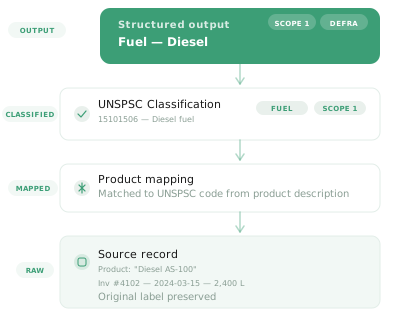
The control point between data and output
Every transaction is assigned a classification. Classification is the structural definition of what the activity represents within the system. It determines the type of activity (fuel, electricity, waste, transport), which emission factors are eligible, which scope applies, how the activity aggregates in reporting, and which physical units are valid.
Raw incoming data carries product labels from external systems: "Diesel AS-100," "District heating Nov," "Mixed waste collection." These labels don't carry standardised meaning. Classification maps them to a governed category using the UNSPSC system, so the platform can interpret every record consistently.
Without classification, emissions cannot be calculated. It is the control point between activity data and every derived output.
KEY DETAILS
How classification governs the system
Classification governs how every activity is typed, calculated, and reported across the platform.
UNSPSC system
Every activity is classified using the United Nations Standard Products and Services Code, ensuring global comparability
Emission factor eligibility
The assigned classification determines which emission factors are eligible for a given activity
Data type guardrails
Each data type has guardrails controlling which classifications are valid, preventing misconfigured entries
Recalculation on change
Changing a classification recalculates all affected transactions, keeping outputs consistent with the current assignment
Original labels preserved
The original product description from the source system is always preserved alongside the assigned classification
Applied in Structure, drives everything in Measure
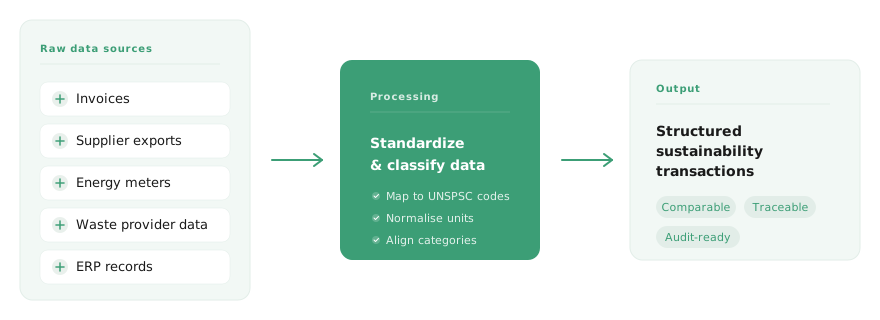
Classification is applied during the Structure step and drives everything in Measure. When methods improve or classifications are refined, the platform can recalculate historical emissions without rewriting source data. This is what makes results comparable across years.
Common questions about classification
Answers to questions we hear from teams working with activity classification.
The United Nations Standard Products and Services Code is a global classification system for products and services. The platform uses UNSPSC to categorise every activity, ensuring consistent typing across organisations, sectors, and reporting frameworks.
All transactions linked to that classification are recalculated automatically. The new classification determines updated emission factors, data types, and category assignments. Historical source data is not altered.
Yes. Classifications can be updated at any time. The platform recalculates affected transactions to reflect the new assignment. The original product description from the source system is always preserved.
The UNSPSC classification determines which emission factors are eligible for a transaction. Different classifications may use different factor databases, calculation methods, or unit conversions. Correct classification is essential for accurate output.
No. The original product description from the source system is always stored alongside the UNSPSC classification. Classification adds a governed layer on top of the raw label. It does not replace it.
The UNSPSC classification library is maintained centrally by the platform. Updates to codes, factor mappings, and data type rules are applied across all organisations. Individual organisations do not need to manage the library themselves.
Classification is applied during Structure
Classification is applied during the Structure step, where raw data becomes governed, calculable transactions. The classifications assigned here determine everything downstream in Measure.