
Platform / Results / Sustainability Reports
Disclosures generated from structured data
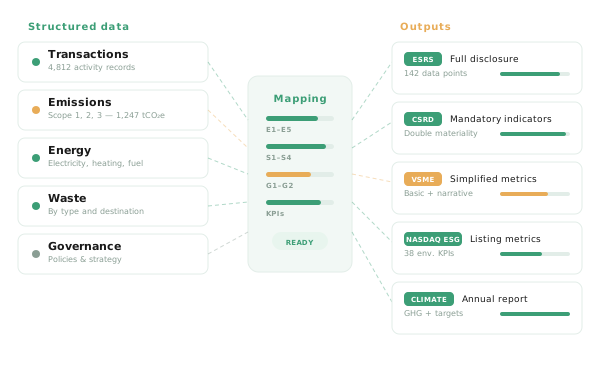
ESRS, CSRD, VSME, climate reports, and Nasdaq ESG, produced from the same operational data, mapped to different frameworks.
Reports that trace every number back to its source
Sustainability reports are generated directly from structured activity data and calculated emissions. The platform maps your data to the requirements of each framework, so switching between standards doesn't mean rebuilding, it means selecting a different output from the same foundation.
Reports combine quantitative data (emissions, energy, waste, resource metrics) with qualitative disclosures (policies, governance, stakeholder engagement) into framework-aligned statements. Because every data point traces back to its source transaction, the reports are audit-ready from the moment they're generated.
As frameworks evolve, new regulations, updated standards, revised methodologies, the underlying data is already structured. New requirements are met by mapping existing data to new outputs, not by collecting it again.
Key details
ESRS, CSRD, VSME, climate reports, Nasdaq ESG, custom disclosures
Quantitative metrics are derived automatically from structured transactions
Qualitative disclosures (policies, governance, strategy) are managed through the Strategy add-on or entered directly
Multiple frameworks can be generated simultaneously from the same data
Every reported metric links back to its source transaction, classification, and emission factor
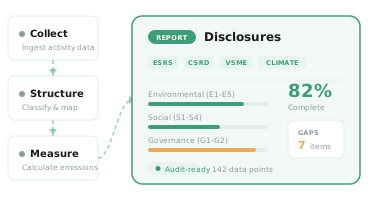
Gap analysis identifies missing or incomplete data points before disclosure
How it connects
Sustainability reports draw from everything upstream — Collect brings data in, Structure makes it consistent, Measure calculates emissions and converts units. The report is the final output, but its quality depends entirely on the structured data behind it.
Common questions about sustainability reports
Answers to the questions we hear from teams evaluating sustainability reporting.
ESRS, CSRD, VSME, climate reports (GHG inventory and targets), and Nasdaq ESG. Multiple frameworks can be generated simultaneously from the same underlying data.
Yes. Every framework draws from the same structured data. You select which outputs you need and the platform maps your data to each framework's requirements. No duplicate data collection.
Quantitative metrics like emissions, energy consumption, and waste volumes are calculated automatically from structured transactions. The platform derives these values using the emission factors and unit conversions applied during the Measure stage.
Qualitative disclosures like policies, governance structures, and stakeholder engagement are managed through the Strategy add-on or entered directly into the platform. They are combined with quantitative data in the final report.
The platform runs a gap analysis before disclosure, identifying missing or incomplete data points for each framework. This helps you address gaps before generating the final report rather than discovering them during audit.
Yes. Every reported metric traces back to its source transaction, classification, and emission factor. The full audit trail is maintained automatically, so when an auditor asks where a number comes from, the answer is already documented.
See how your data becomes a disclosure
See how structured data turns into framework-aligned disclosures, and how the platform keeps your reports audit-ready as standards evolve.