
Platform / Data Infrastructure / Audit Trail
A complete history of every data point
Every source, change, and calculation is recorded automatically. When a number changes, you can see why, and so can your auditor.
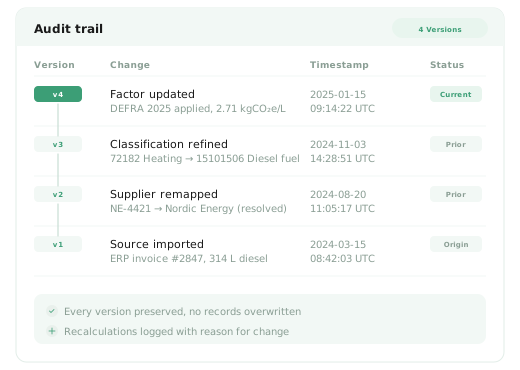
A continuous record, not a year-end exercise
The platform maintains a full history of how every data point entered, how it was structured, how it was calculated, and how it has changed over time. This includes the original source system, the import timestamp, the classification applied, the emission factor used, and every subsequent change to any of these.
When methodologies improve, a new emission factor is published, a classification is refined, a validity period shifts, the audit trail records the change as a new version. Prior records stay intact. This means historical results can be recalculated without losing the ability to see what was reported previously.
The audit trail is not something you create at year-end. It's built continuously as data flows through the system.
KEY DETAILS
How the audit trail works
Every change to data, methodology, or structure is recorded with full context and preserved indefinitely.
Source and import tracking
Every transaction records its source system, import timestamp, and original values.
Version-based change history
Classification changes, supplier changes, and factor updates create new versions rather than overwriting existing records.
Historical preservation
Prior versions are preserved so results remain comparable across reporting periods.
Recalculation logging
Recalculations are logged with the reason for the change, maintaining a clear record of why results shifted.
End-to-end traceability
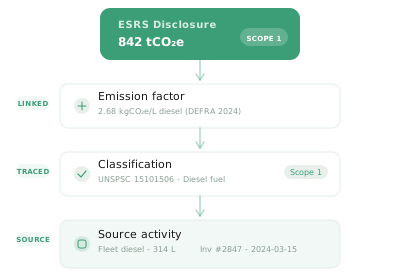
The complete chain from reported metric to calculation to source transaction is always traceable.
Audit readiness built into the data lineage
The audit trail supports the Report capability's audit readiness. Every disclosed metric can be traced back through its full lineage.
It's also what makes the platform's approach to recalculation safe: because the full history is preserved, improving methodology doesn't break historical integrity.
Common questions about audit trails
Answers to questions we hear from sustainability teams and auditors evaluating data integrity.
Every data point's source system, import timestamp, classification, emission factor, supplier identity, and all subsequent changes to any of these. The record includes what triggered the change and when it occurred.
No. The audit trail is append-only. New versions are added when changes occur, but prior records are never modified or removed. This ensures the integrity auditors require.
Auditors can trace any disclosed metric back through its full calculation chain to the original source data. Every step, from reported figure to emission factor to classification to raw transaction, is linked and timestamped.
The platform records the factor change as a new version. Affected calculations can be rerun with the new factor, and the audit trail preserves both the previous and current results so you can see exactly what changed and why.
Yes. Historical records remain intact across periods. When methodology or structure improves, prior periods can be recalculated while preserving the original reported values for comparison.
From traceability to disclosure
Every metric the platform reports is backed by a complete chain of evidence. The audit trail ensures that improving your methodology never means losing sight of what was reported before.