

Grupo Arpoador: the hotel group that measures by the guest night
Four properties in Rio de Janeiro running emissions, water and energy per guest night, because an annual total is something you report and a unit figure is something you manage.
A collection, not a chain.
Grupo Arpoador is a family-run hotel and restaurant group in Rio de Janeiro. It runs Hotel Arpoador and Ipanema Inn along with arp bar and the restaurant Quitéria, in Ipanema and Arpoador. Its Sustainable City&Sea programme was developed with HUBIS Consultoria, with Klappir implemented in 2025 as the data infrastructure for resource and carbon data, alongside Ctrl+Waste for waste management.
The group treats sustainability as part of how it operates rather than something reported on the side, and has published an annual sustainability report every year since 2022.
Annual totals arrive too late to be useful.
A hotel’s total consumption for the year is a number that describes something already finished. It tells a general manager what happened, at a point when nothing can be done about it, and it moves for reasons that have nothing to do with performance. A busier year uses more water. That is not a decline.
What a hotel operator needs is the same shape of number they already use for cost: a figure per unit of business. Cost per room is understood by everyone who runs a property. Water per guest night is the same idea applied to a resource, and almost nobody was calculating it.
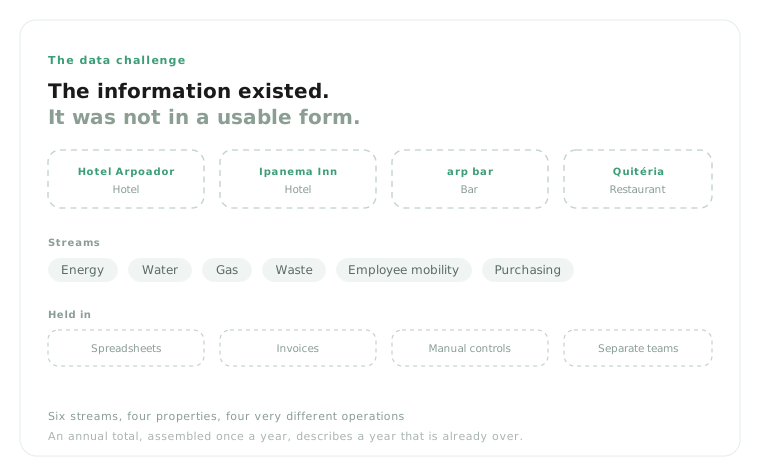
Before the programme, the information existed but not in a usable form. Energy, water, gas, waste, employee mobility and purchasing data sat across spreadsheets, invoices, manual controls and separate operational teams, in four properties with very different operations. A restaurant is not a hotel, and a bar is not either.
Consumption, divided by occupancy, continuously.
The programme was built by HUBIS, who designed the data architecture, structured the governance routines, trained the teams, set up the internal ESG committee and translated sustainability standards into daily hotel operations.
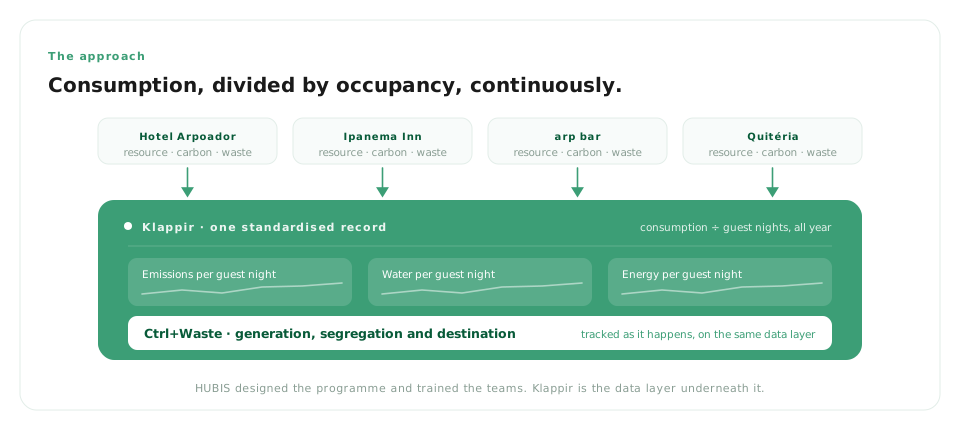
Klappir consolidated energy, water, gas, waste, employee travel and purchasing into one standardised record across the group, which is what makes a footprint calculable by scope and by unit rather than assembled once a year by hand. Ctrl+Waste, a waste management platform built by the same team behind HUBIS, digitalised waste handling so that generation, segregation and destination could be tracked as they happen. The two sit either side of the same data layer, which is why the waste numbers and the carbon numbers describe the same operation rather than two versions of it.
The step that changed how the numbers get used was dividing consumption by guest nights. An intensity figure separates performance from occupancy, which means a rise in April is a signal rather than a season. The group now runs emissions, water consumption and energy use per guest night as live indicators through the year.
The results
What the data shows.
91.3% of waste diverted at Hotel Arpoador
Hotel Arpoador’s Lixo Zero certification from Instituto Lixo Zero Brasil records 91.3% of waste diverted from landfill, incineration and co-processing. Tracking generation, segregation and destination made the composition of waste visible, not just its weight, which is what turns a diversion target into specific decisions about specific streams.
Carbon neutral, and renewable by contract
The group neutralised its footprint through ISS Neutro, Rio de Janeiro’s municipal programme for the voluntary carbon market, which requires an audited emissions inventory to qualify. Electricity is 100% certified renewable through I-RECs.
First place, environmental category, Prêmio Hub ESG Hotel Business 2026
In September 2026 Hotel Arpoador took first place in the environmental category at the first edition of the Prêmio Hub ESG Hotel Business, awarded at Equipotel. HUBIS Consultoria named Klappir and Ctrl+Waste as the partners on the winning work. Hotel Arpoador also won the Selo Verde de Hotelaria prize in 2024 and has been recognised in the category for four consecutive years.
More than 100 employees trained
The largest single investment in the programme and the reason it holds. Data changes nothing if the people generating the consumption are not the people reading the numbers.
Governance that outlasts a project
Recurring committee routines and decisions taken against data rather than around it. This is the part that decides whether the rest survives a change of staff.
Intensity indicators in continuous use
Emissions, water and energy per guest night, running through the year rather than calculated at the end of it. This is the result that makes the others repeatable.
“Klappir helped us bring our sustainability data into one place and turn our carbon management into a more reliable, structured and strategic process. Together with Ctrl+Waste and HUBIS, we were able to connect ESG indicators, waste management and hotel operations in a practical way. This gave us the confidence to report our progress, support our carbon neutral journey and show that sustainable hospitality can be managed with real data.”

Looking ahead
Hotel Arpoador holds Green Key certification. The group’s next steps include reporting and certification renewal, extending Green Key across the rest of the group, further Zero Waste improvements, and a focus on food waste, which is the natural next target once waste composition is visible and a restaurant sits inside the reporting boundary.
Further reading: Hotel Arpoador: Sustainable hospitality, measured by the guest night
Common questions
What teams most often ask about this story.
Total consumption divided by occupied room nights. It shows whether a property is using resources more efficiently, independently of how full it was.
Because it moves for reasons you control. An annual total rises with a good season. An intensity figure does not, so a change in it is worth investigating.
Ctrl+Waste is a waste management platform built by the same team behind HUBIS Consultoria. It digitalises waste handling so generation, segregation and destination can be tracked in real time. It is used alongside Klappir in this programme, not instead of it.
The group achieved these results, with HUBIS designing and delivering the programme. Klappir is the data infrastructure underneath it: the layer that standardises how resource data is defined, exchanged and trusted, so the numbers are visible and verifiable when a certification body, a municipal programme or a corporate client asks.
Have a different question?
Talk to our team about your organisation’s data infrastructure.
See how it works on your own properties
Book a 30 minute walkthrough.
No commitment. No sales deck. Just a conversation about your data.