
Platform / Collaborate
Data doesn't stop at your organisation
Connect suppliers, subsidiaries, and partners to the same structured data infrastructure, so data flows across relationships instead of being re-collected for each one.
Used by 200+ organizations across 26 countries
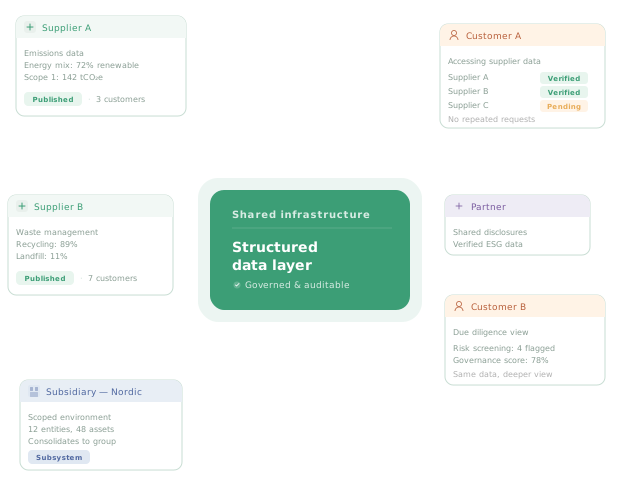
Each new customer request starts the process again
Suppliers, partners, and service providers all generate data that affects sustainability reporting. Today, this data is collected repeatedly, through spreadsheets, questionnaires, and one-off requests, and rarely reused across relationships.
Each new customer request starts the process again.
Extend the data infrastructure across the value chain
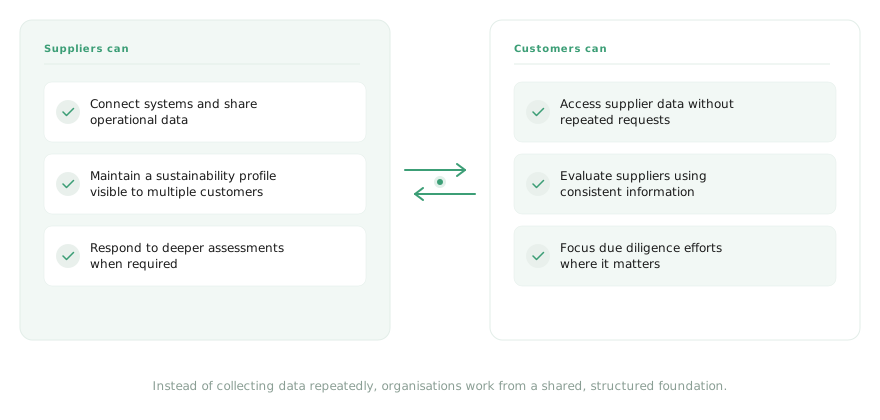
A shared sustainability data infrastructure allows organisations and suppliers to exchange data using the same structures and methodologies. Data is contributed once and reused across relationships.
“Sustainability covers so many things; everything from garbage cans to personnel matters, and no large company today can afford to handle it as an afterthought if it wants to maintain excellence in operations. At IKEA, we have taken targeted actions, big and small, in line with the data we have, to do better in environmental, social and governance (ESG) responsibility. We have published sustainability statements from 2018 in cooperation with Klappir. It is important for us to track and publish statistical information about our ESG goals and position in order to improve each year. It is also important to be able to keep track of actual data regarding sustainability (ESG) performance in the Klappir Sustainability Platform.”

Common questions about value chain collaboration
Answers to the questions we hear from sustainability teams evaluating how Klappir supports supplier and partner data exchange.
Suppliers can connect their own systems via API or FTP, upload files, or enter data directly through the platform. The Core Plan is free for value chain participants, removing cost as a barrier. Data is structured on entry and reusable across multiple customer relationships.
A structured sustainability disclosure that a supplier publishes once and makes visible to all authorised customers. Profiles cover emissions, energy mix, governance indicators, and ESG metrics. They replace repeated questionnaires with verified, consistent information.
Yes. The platform supports structured due diligence surveys sent to individual suppliers. Responses flow back into the same governed data environment and are available alongside other supplier data for comparison and reporting.
Subsystems allow subsidiaries, joint ventures, or business units to operate within the same infrastructure. Each subsystem has its own operational view while data consolidates upward for group-level reporting. Access controls determine what each entity can see.
Customers see the supplier's published Impact Profile and any completed due diligence responses. They do not see the supplier's internal operational data or data shared with other customers. The supplier controls what is published.
Data that flows both ways
The same infrastructure that collects supplier data also shares your verified disclosures outward, to customers, investors, and partners who need it. One structured foundation, serving the whole value chain.