
What is a Sustainability Platform
A sustainability platform is a structured software system that enables organisations to collect, govern, and act on sustainability and resource data across their operations. At its core, it provides the data foundation that connects operational activity, energy use, waste, water, materials, and transport to the insights, reports, and decisions required by sustainability management.
More than a reporting tool
The term "sustainability platform" is used broadly in the market, but the underlying architectures vary significantly. Some products focus primarily on report generation. Others focus on data collection or stakeholder surveys. What distinguishes a platform from a point solution is the depth of the data layer beneath it, how data is structured, governed, and made reusable across different purposes.
A well-built sustainability platform does not start with the report. It starts with the data. When resource data is structured consistently from the point of collection, classified, validated, enriched with conversion factors, and stored with a full audit trail, it can serve multiple outputs without being rebuilt each time.
The same underlying data can produce a regulatory disclosure, an operational dashboard, a supply chain transparency report, and a response to an investor data request. This is the distinction between a data foundation and a reporting layer built on top of fragmented inputs.
How the Klappir Sustainability Platform is built
The Klappir Sustainability Platform is a cloud-based SaaS solution built on a canonical data model, a standardised structure that classifies every resource transaction consistently across locations, legal entities, time periods, and organisational boundaries. This model is the structural foundation from which all platform capabilities derive.
Data enters the platform from any source, such as ERP integrations, supplier submissions, file uploads, or direct API connections. Regardless of origin or format, it is classified using a consistent structure before being stored. From that point, the same governed data foundation serves every function the platform provides: performance monitoring, regulatory reporting, value chain management, and stakeholder disclosure.
The Klappir Platform is delivered as a modular solution, meaning organisations can start with the capabilities most relevant to their current needs and expand over time, without rebuilding their data foundation as requirements grow.
Core capabilities
- Data collection and structuring: Resource data from across an organisation's operations and value chain is collected, classified, and validated in a single system. This includes energy consumption, greenhouse gas emissions, water usage, waste generation, and material flows, captured at the transaction level with full traceability to the source.<br>
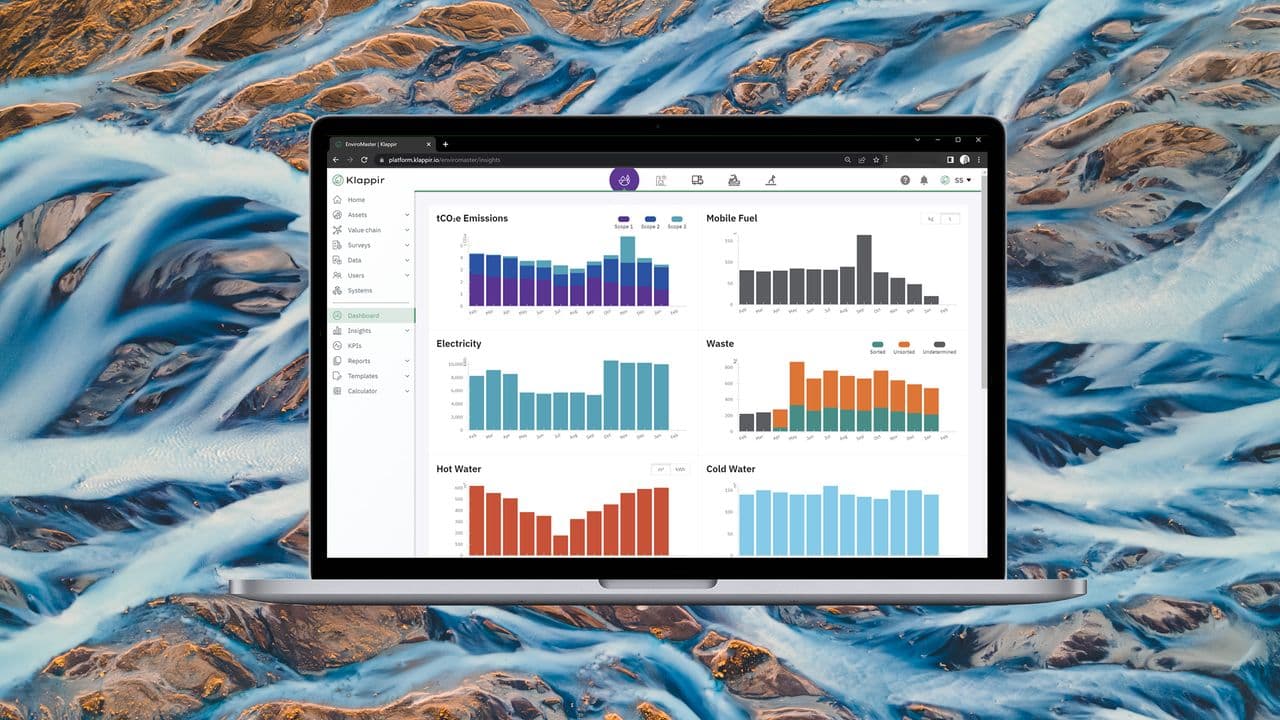
- Performance monitoring: Sustainability metrics are continuously updated and visualised through dashboards, enabling near-real-time monitoring of performance trends, progress against targets, and the identification of operational inefficiencies.<br>
- Regulatory reporting: Structured data maps automatically to leading reporting frameworks, ESRS, VSME, and others, reducing the manual effort required to produce disclosures and improving audit readiness. Because the data is governed from the point of collection, reporting does not require reconciliation before it can be produced.<br>
- Value chain management: Supplier assessment tools and structured data sharing enable organisations to systematically collect sustainability data from their value chains. Rather than relying on custom templates or ad hoc requests, value chain partners can contribute data through standardised workflows, improving coverage, consistency, and comparability.<br>
- Analytics and decision support: Analytical tools surface patterns in resource consumption, identify areas for improvement, and support strategic decisions about where to direct sustainability efforts. Performance is tracked against defined targets, with KPIs that provide a quantitative basis for assessing progress over time.
A shared data foundation
One of the defining features of the Klappir Platform is that it is designed not just for single organisations, but for the relationships between them. When suppliers, subsidiaries, and partners use the same data structure, sustainability data can flow reliably between organisations, without custom formatting, manual reconciliation, or translation on either side.
This matters increasingly as regulatory requirements, investor expectations, and customer due diligence requests all require organisations to demonstrate not just their own sustainability performance, but the performance of their broader value chain. A platform built on a shared data standard is structurally better positioned to meet those demands than one built around isolated, organisation-specific data models.
Built for how sustainability data actually works
Sustainability data is operational by nature. It originates in the same transactions, invoices, and consumption records that organisations generate in the course of normal business activity. A sustainability platform that connects directly to operational sources, rather than relying on manual data entry or periodic exports, produces more accurate, timely, and auditable data.
The Klappir Platform is built on this principle: sustainability data should be structured once, governed consistently, and reused for every purpose it serves, from operational efficiency to regulatory compliance to stakeholder transparency.
Klappir
Klappir Green Solutions
Klappir is a sustainability data platform that helps organizations measure, manage, and report their environmental impact.